The Everyday Museum is a public art initiative by Singapore Art Museum that commissions diverse art projects and programmes to create physical and virtual nodes for engagement and interaction, shaping cultural spaces for and with communities. Dedicated to supporting artistic practice in public spaces, The Everyday Museum is a platform for creative production and experimentation that transforms everyday experiences into meaningful encounters and offers new perspectives on the conditions of our time.
To find out more about the programmes and discover #ArtWhereYouAre, please visit
tanjong pagar
central business district
What rhythms exist in a business district where time is of the essence and moving through it demands quick decision and deft navigation?
Responding to the shifting rhythms and logics of the Central Business District, Singapore-based artists create works that slip into the spaces between buildings and pedestrian paths, offering moments for listening and reminiscence. By introducing these brief interventions into daily routines, this latest series of SAM’s public art initiative, Momentary Pulses draws attention to the subtle irregularities of urban time and textures that surface when we pause.
Spiralscape VII: World’s Healing Sluice
Spiralscape VII: World’s Healing Sluice is a text-based adventure video game that opens gateways to other universes. Players take on the role of a “stonehealer”, a part-craftsman and part-mage character who hails from a world of statues, navigating ruined landscapes in need of mending. Guided by branching narrative choices, written responses and digital sketches fed into the game, players explore fantasy worlds in disrepair, each defined by a central landmark: a fountain, a bridge and a façade.
Inspired by early hypertext interactive fiction and branching narrative gamebooks, Spiralscape VII prompts players to make choices, reflect and shape their own journey. With players’ consent, their responses are preserved as an archive of their emotions and experiences. The video game features a soundtrack by the collaborative artist group elekhlekha อีเหละเขละขละ, drawing from their live coding performances that explore Southeast Asia’s sound cultures and shared sonic heritage.
Spiralscape VII uses hypertextual encounters to rearticulate histories of public art as navigations of space and context. It moves towards a dislodge of the world-as-is, echoing artists’ political invocations across time for futures of regeneration, redistribution and sustenance.
Kapilan NaiduSalintar Dreams of a Tranquil Sea (soliloquy_tpd)
2026
Custom software, large language model, LED dot-matrix panels and, computer
Location: Side gate entrance, Tanjong Pagar Distripark
--------------------
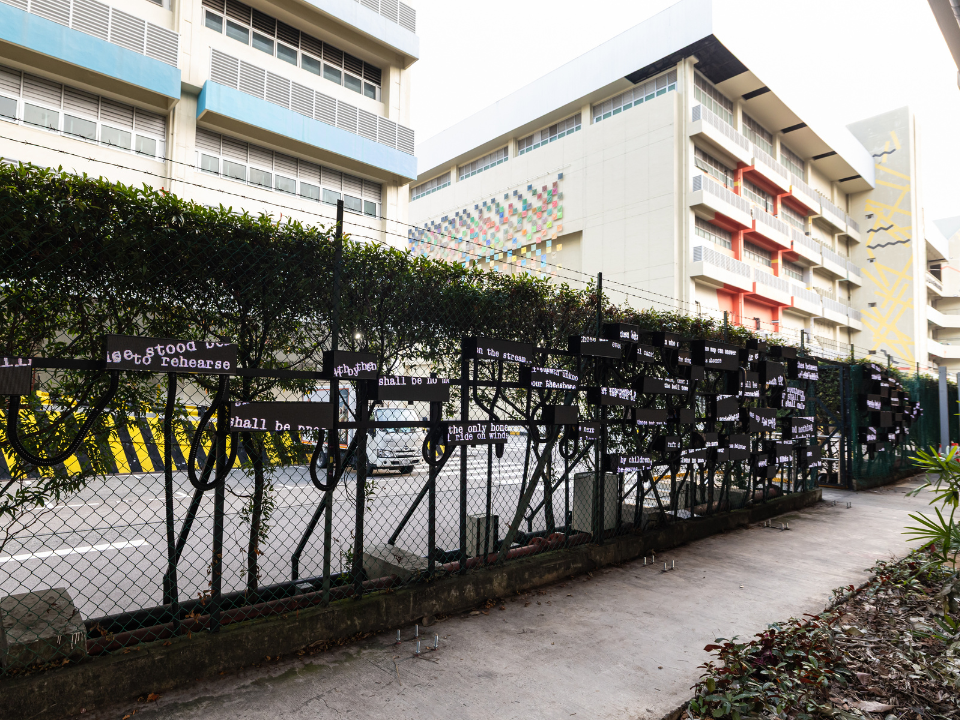
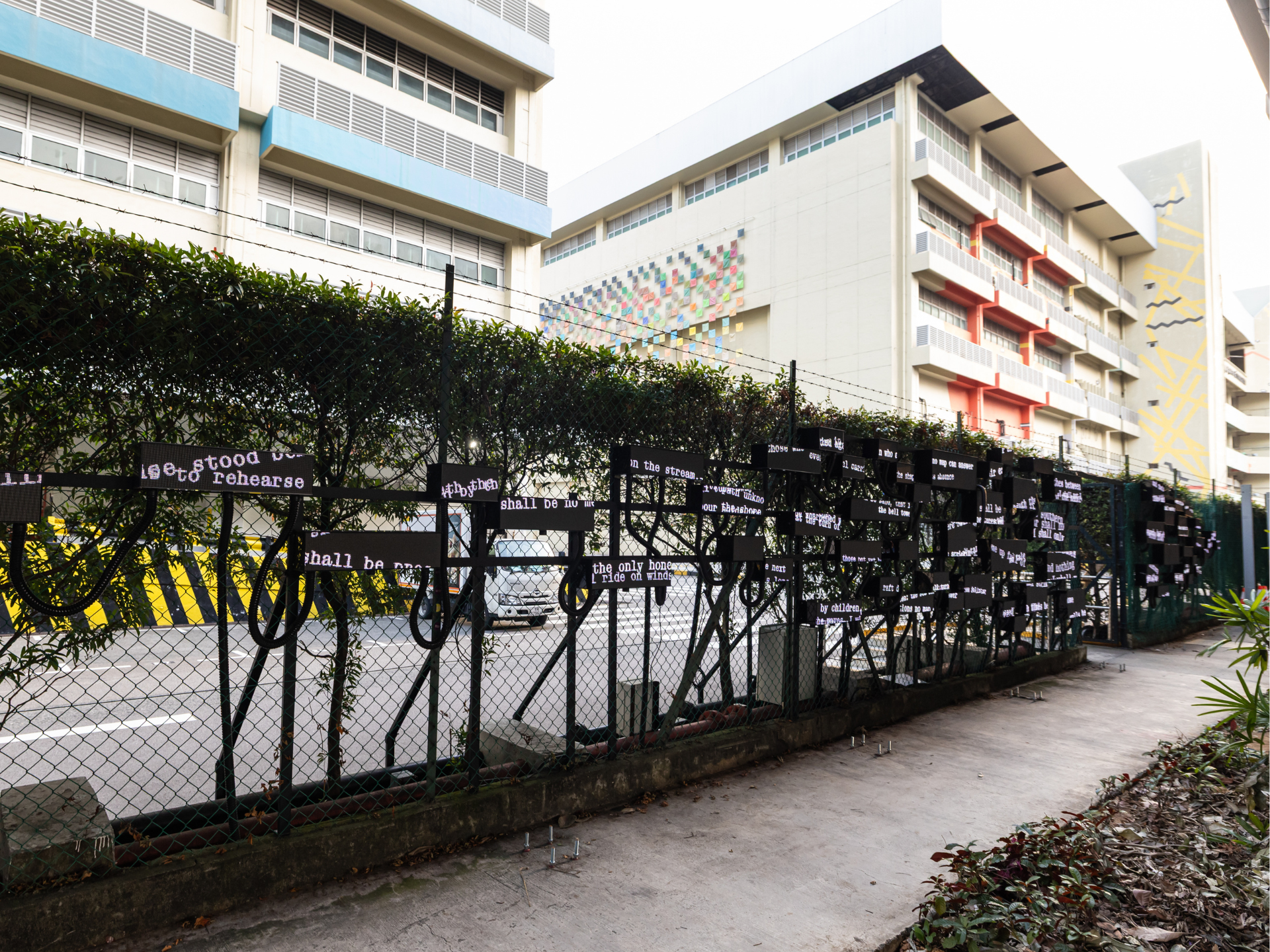
Salintar Dreams of a Tranquil Sea (soliloquy_tpd) explores dreams as both longing and visions of possible futures. Part of the soliloquy series, this site-specific installation uses custom-trained large language models (LLMs) to generate text that shapes its narrative and visual form.
This work personifies the lost fishing village of Salintar as a dreaming entity, drifting between past and present. Drawing from the Sejarah Melayu and early Malay sources, it presents speculative monologues—reveries shaped by hope, where the village imagines itself enduring, thriving, and growing alongside the sea. The installation features fragmented LED matrix strips that display monochromatic, wave-like text. These shifting lines are generated by real-time environmental data such as tidal movements, wind, and passing ships, mirroring the area’s constant state of flux.
From afar, the screens ripple like the sea. Up close, narratives emerge and dissolve as viewers move. Through this interplay of language, history and environment, the artwork reflects on memory, displacement and the unseen human stories that shape the city’s identity.
Joyce Beetuan KohOASIS
2025
Sound and light installation, vinyl mural
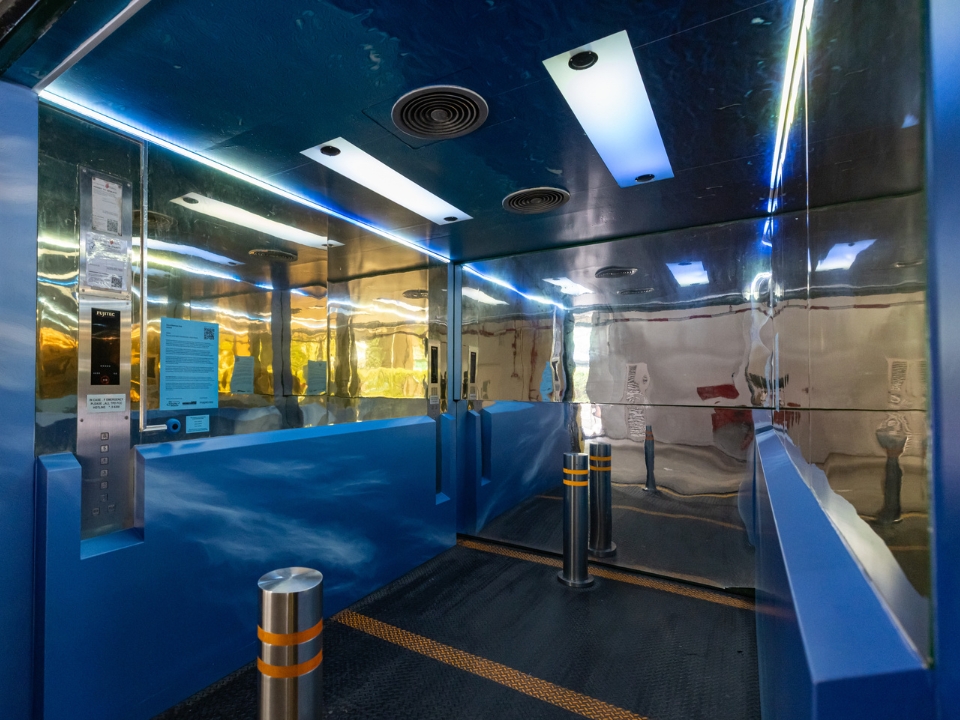
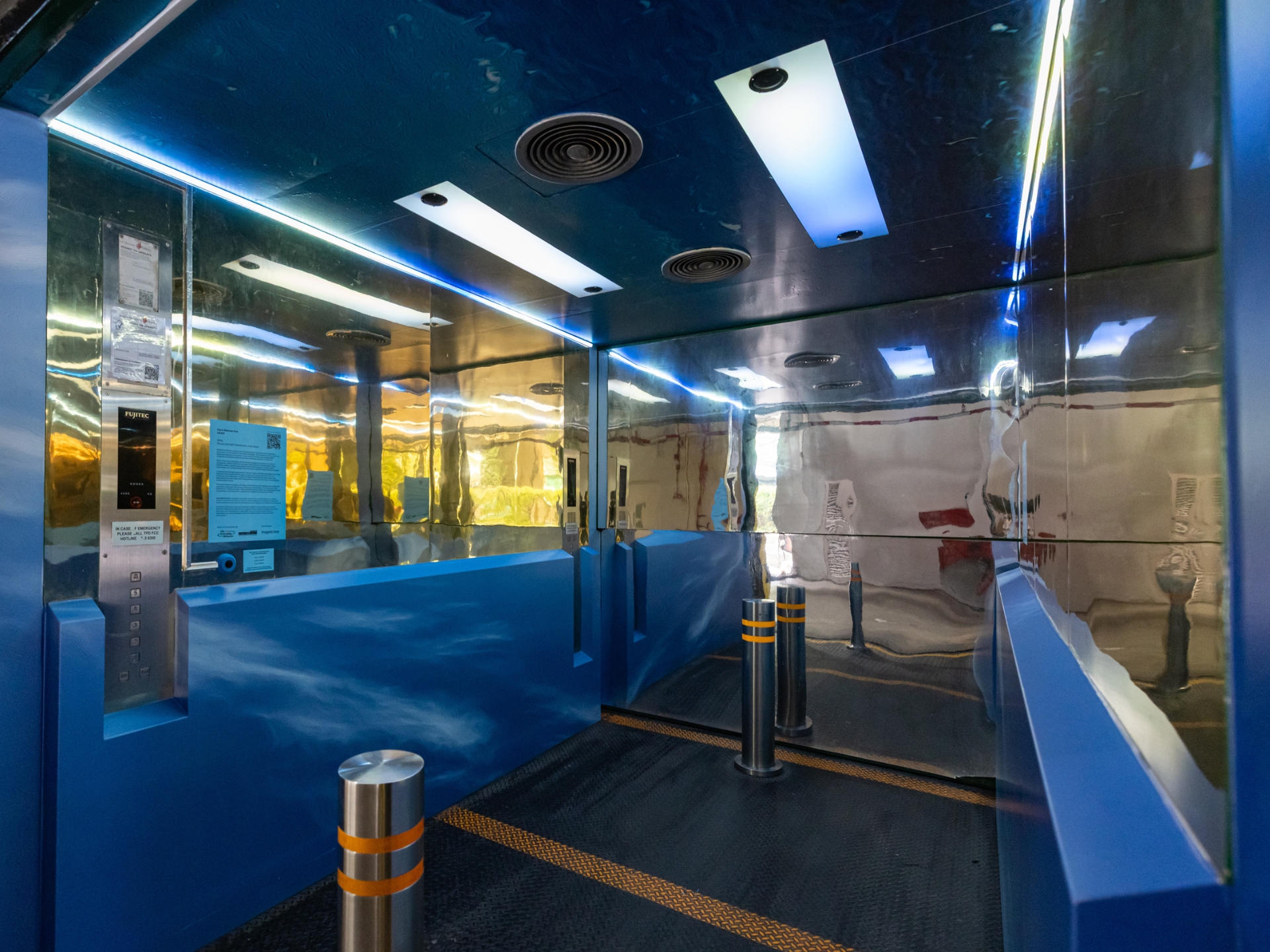
OASIS transforms a working cargo lift at Tanjong Pagar Distripark into a momentary sanctuary, a sonic pause in the midst of passage. The installation invites visitors to dwell and experience moments of calm within a liminal space that has been designed for movement, prompting a reflection on the in-between moments of daily life.
Lifts are often silent, shared only in passing, and rarely considered spaces for sensory attunement. OASIS embraces the distinct character of this lift: its mechanical hums, metallic creaks, upward-opening doors and unhurried pace. Through subtle interventions of sound and light, the installation amplifies what is already present, revealing the quiet textures embedded in transition.
Its layered soundscape, composed of resonant tones and field recordings drawn from natural surroundings, creates a liminal atmosphere that is at once immersive and meditative. Visually, the deep celestial blue of lapis lazuli, long associated with spirituality and transcendence, envelops the space, encouraging a contemplative mood.
The work evolves throughout the day, with distinct sound compositions and lighting conditions calibrated for morning, afternoon, and evening, mirroring the shifting rhythms of a typical workday. These transitions draw visitors into a heightened state of awareness, attuning them to details that might otherwise go unnoticed.
Location: Various locations within Tanjong Pagar Distripark
--------------------
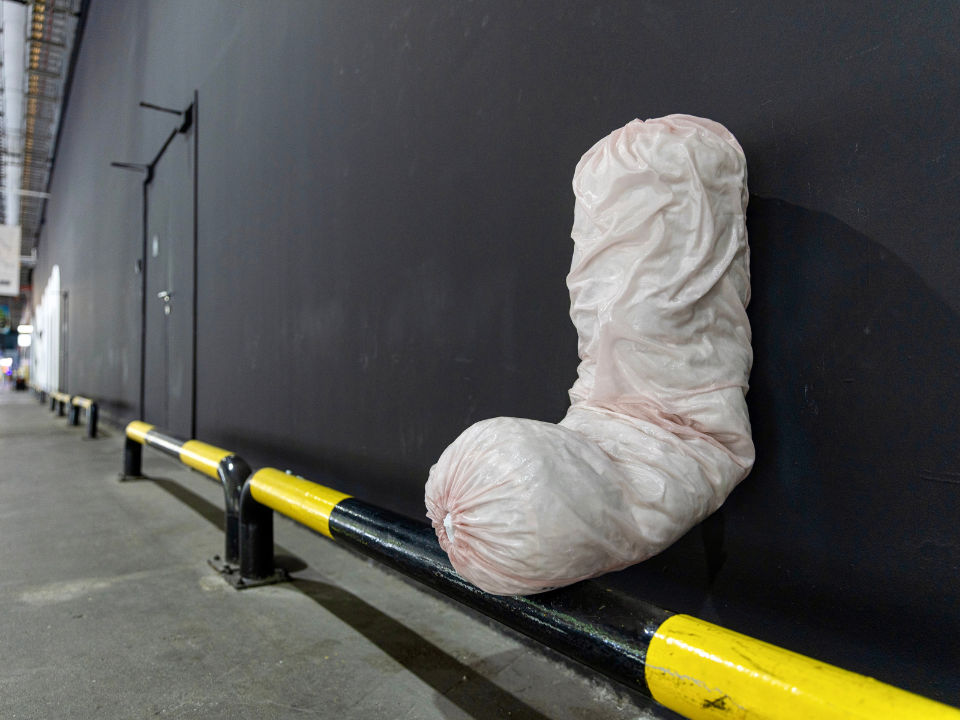
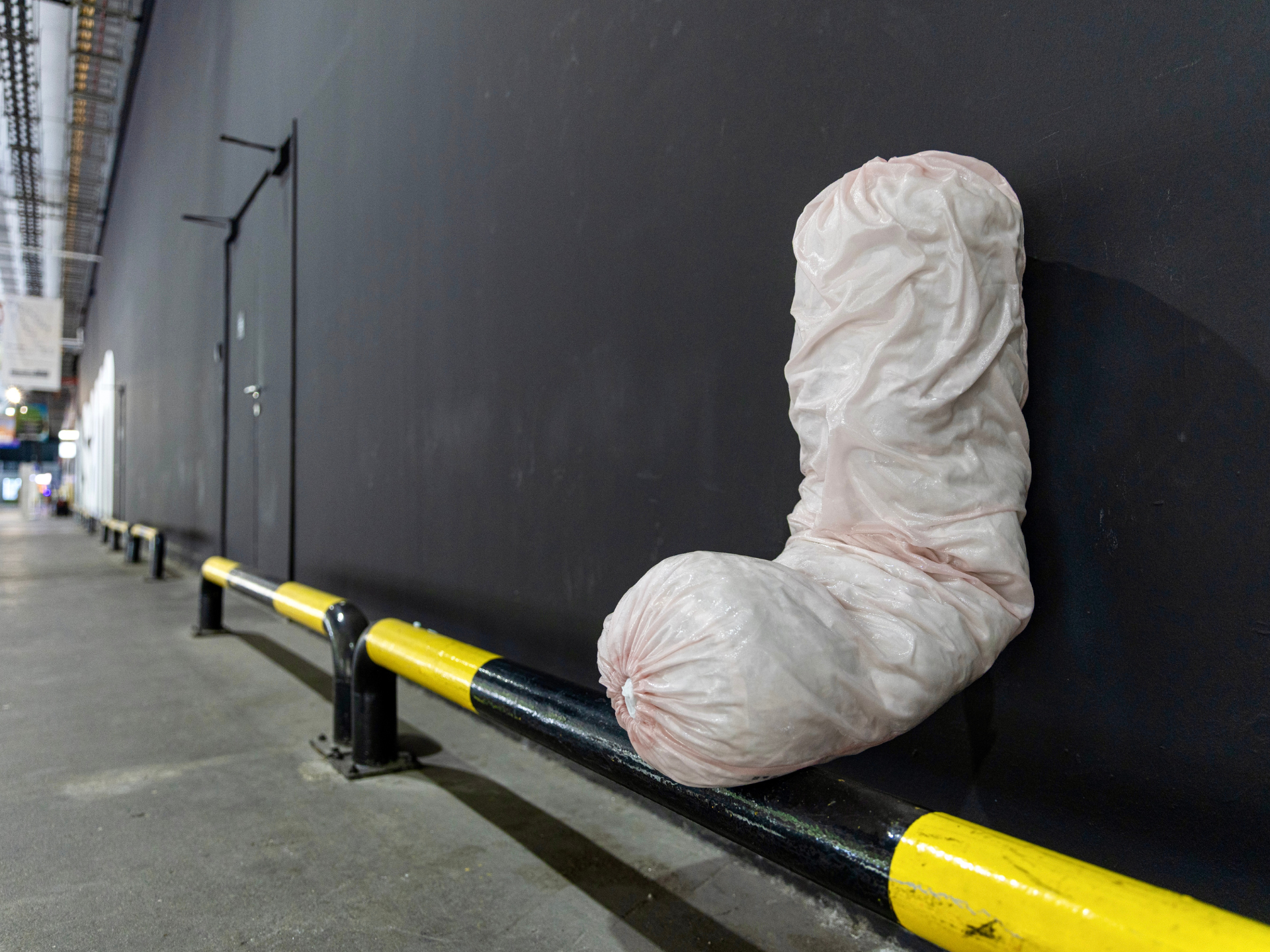
Insomniac States is a series of interventions that reflects upon the restlessness of Tanjong Pagar Distripark. The sculptures are modelled after objects of rest: pillows, bolsters and padded benches that resemble mattresses. Scattered around the site, they are found slumped, wedged or nestled in various spaces.
Responding to the tireless energy and production of the site with a desire to rest, the artist observed how workers intuitively rest in in-between spaces, leaning into barrier gaps or sitting on ledges. On the ground level, he introduces a custom bench embedded within the gap of a safety barrier. Subtle but purposeful, the seating transforms an overlooked ledge into an informal resting spot, an understated nod to the people who keep the site in motion.
Representative of a growing problem of tiredness that stems from the demands of work, Insomniac States beckons rest and reprieve in a site of energy. Interjecting the industrial with the soft, plush and domestic, these absurd sculptures are also a poignant reminder of the restlessness of our times.
Grace TanSea of flags
2023
398 Digital UV prints on PVC hoisted on tension cables with stainless steel fasteners, dimensions variable
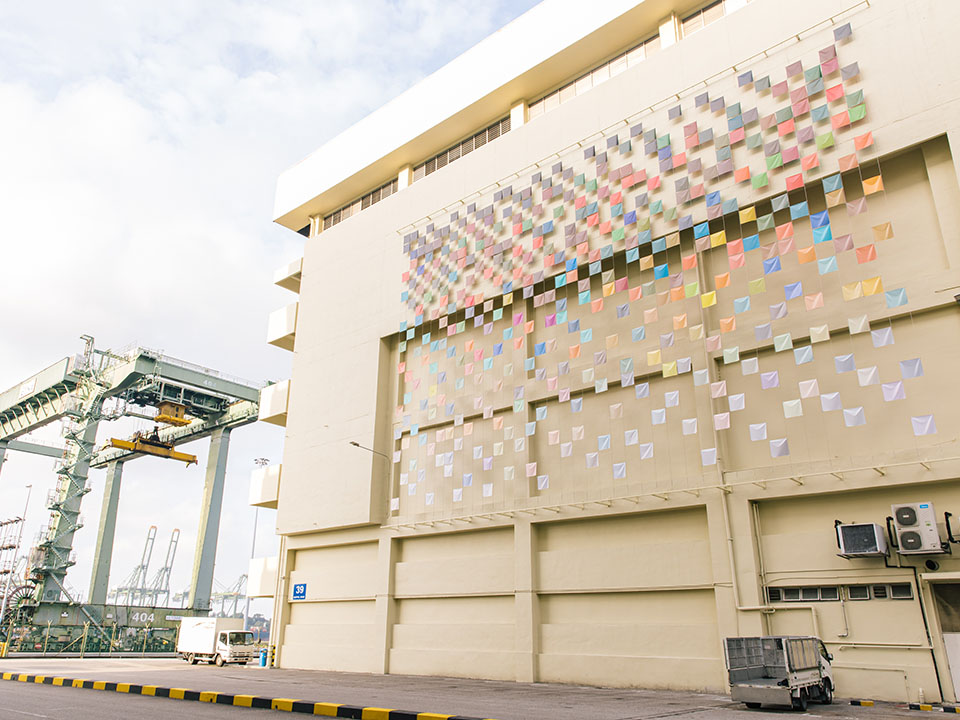
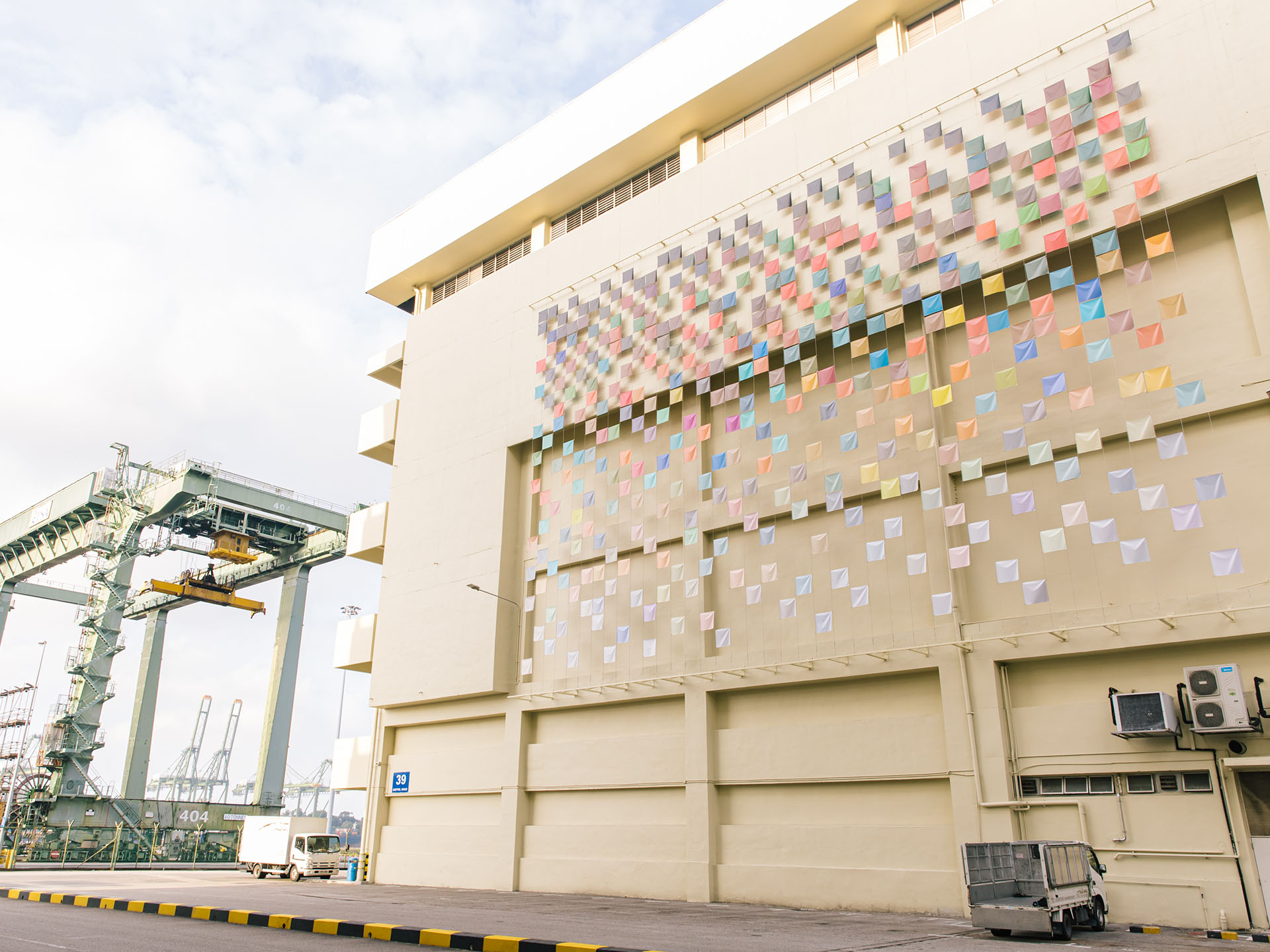
Sea of flags engages with the history and identity of Tanjong Pagar and is a tribute to the
memory of the district’s massive development over two centuries. The flags that make up the
installation are an assemblage of material swatches colour-matched with physical objects and
digital images of the area. Consolidated from over 400 colours, these swatches are derived from
the landscape and architecture, natural and man-made materials that have defined the vicinity’s
industries of the past.
The colours of crimson, orange, pale yellow and brown, highlight the fruit plantation history of the
land in the 1800s, where gambier, nutmeg and mace, pepper and pineapple were once
cultivated. Land reclamation from as early as the 1840s and the construction of wharves and
docks substantially transformed Tanjong Pagar’s coastal landscape – several hills such as
Mount Wallich, Cursetjee Hill, part of Mount Palmer, Keramat Hill, Bain’s Hill and Guthrie Hill
were levelled to reclaim land from the swamps.
Moving like a ripple with the wind, Sea of flags’ presence on the reclaimed land where Tanjong
Pagar Distripark stands today signifies the fleetingness of the physical world where spatial
boundaries are indeterminate. Constantly shifting and blurring, they evoke the capricious
movement of the surrounding sea.
About the Artist Grace Tan (b. 1979, Malaysia) is a multidisciplinary artist and designer with an interest in
geometry, material and construction. From creating wearable fabric artworks under her kwodrent
series, she has evolved into sculptural objects and site-specific installations. Tan was awarded the
President's Design Award for Building as a Body in 2012 and the Young Artist Award in 2013. In
recent years, she has worked on large public art commissions in Singapore such as Woven Field
at Downtown Line, Little India Station (2015), PLANES and CURRENTS at Marina One (2017),
SYMMETRY at DUO (2017) and n. 333 – State of Equilibrium at Raffles City (2018). Tan has shown widely in Singapore, Australia, Japan, and the United Kingdom.
Production Credits:
Artist Assistants: Lewis Ten, Li Si Yi, and Mervyn Chen
Genevieve ChuaProve You Are Human
From 6 Jan 2023
2023
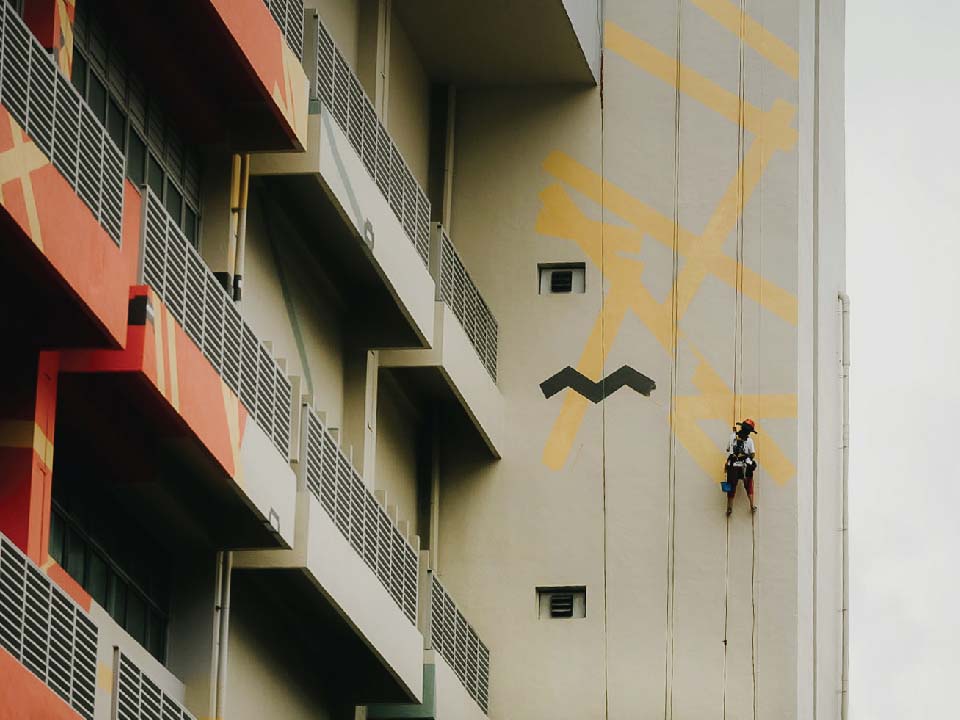
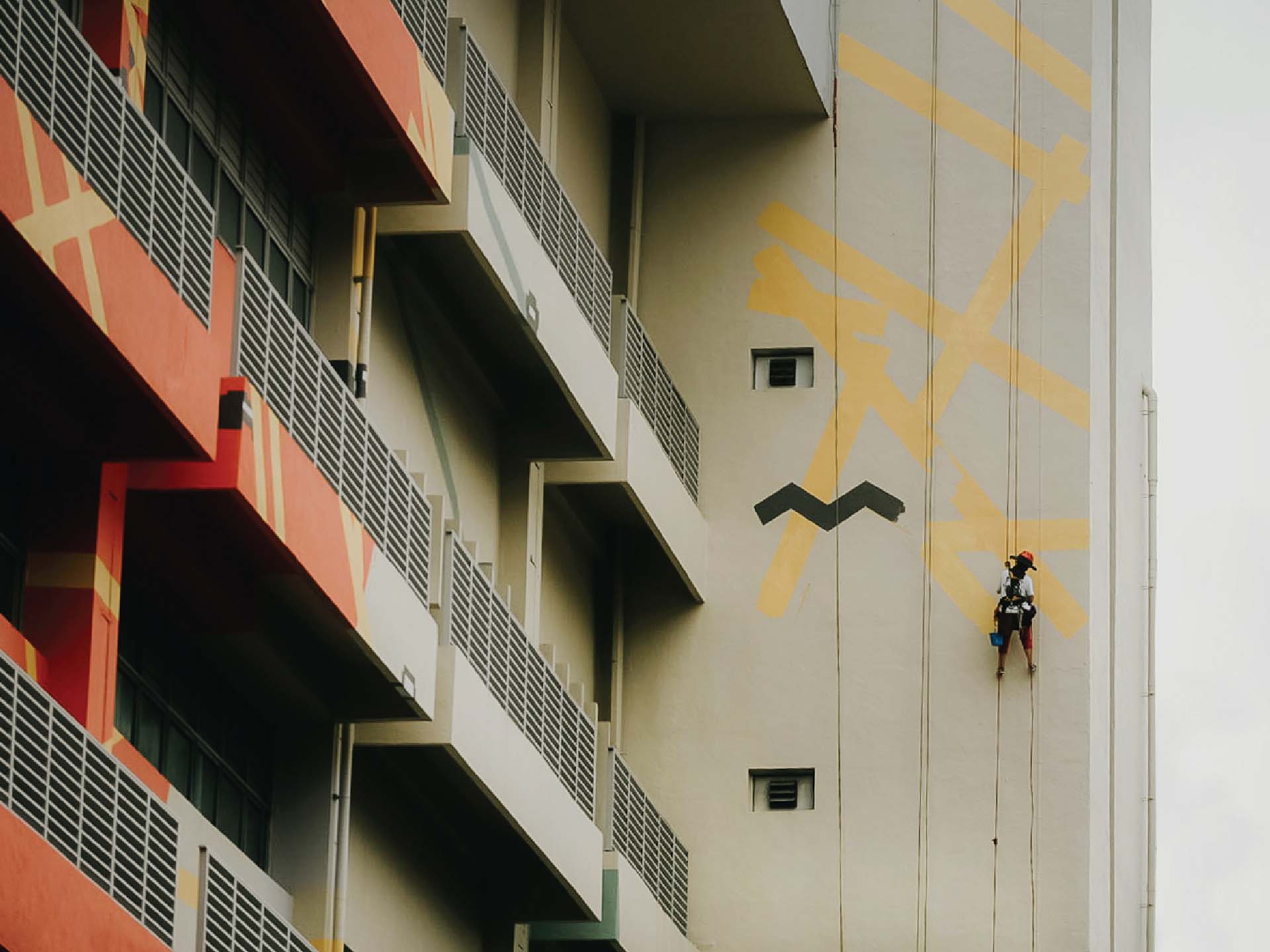
In an increasingly algorithmically motivated and automated world, how does one identify a real user among automated users? Are we now automated users ourselves? The CAPTCHA codes plastered across the building may be challenging to read, but when they are eventually verbalised, they ring alongside the humdrum of surrounding traffic – the colliding and skewed letters abuzz with movement of vehicles in and around.
Located at: Blk 39, Building Facade, Tanjong Pagar Distripark
Public outdoor work. Accessible at all times.
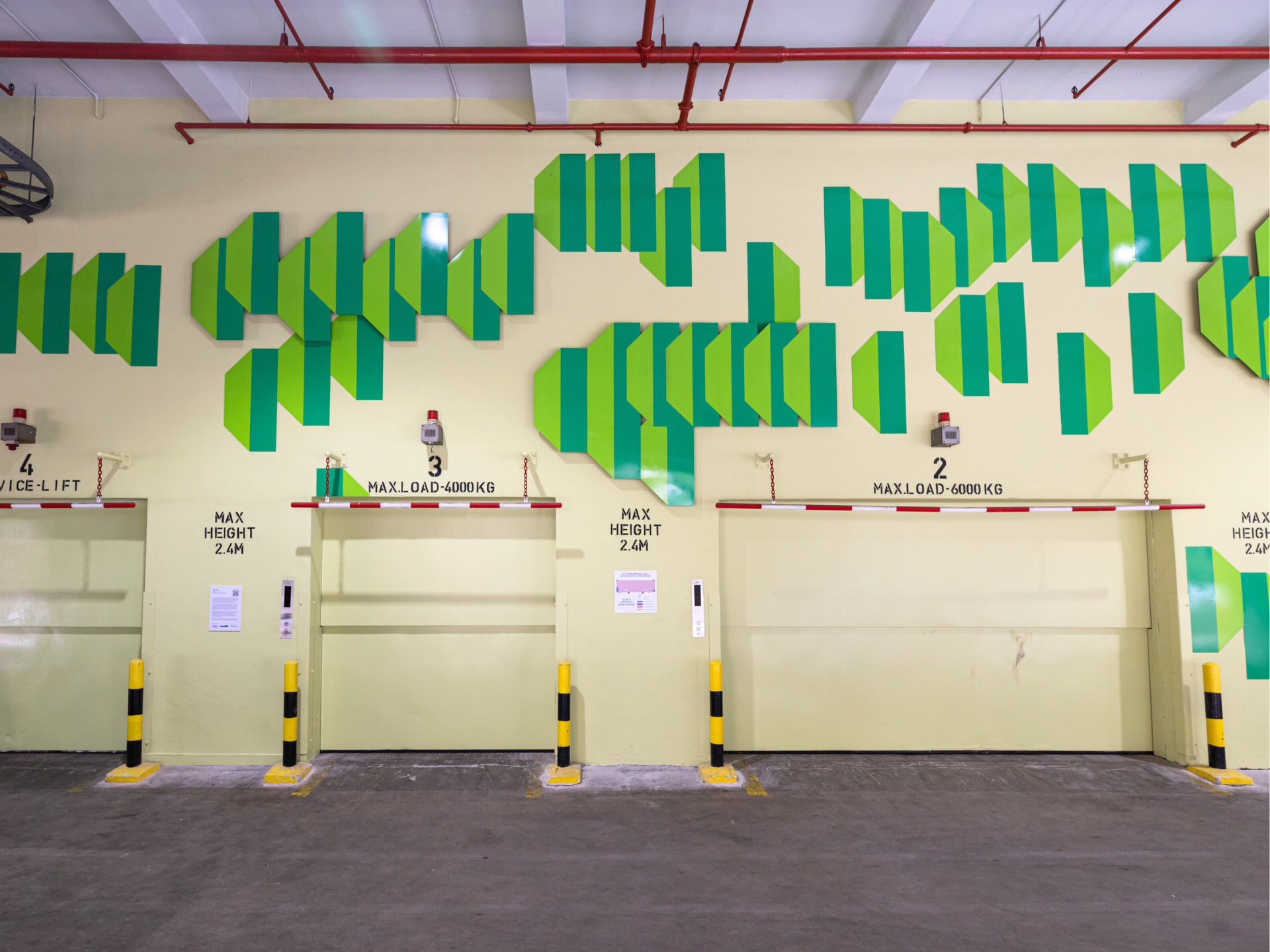
Fiona SeowGreener Pastures
17 Jan 2025 to 31 Dec 2026
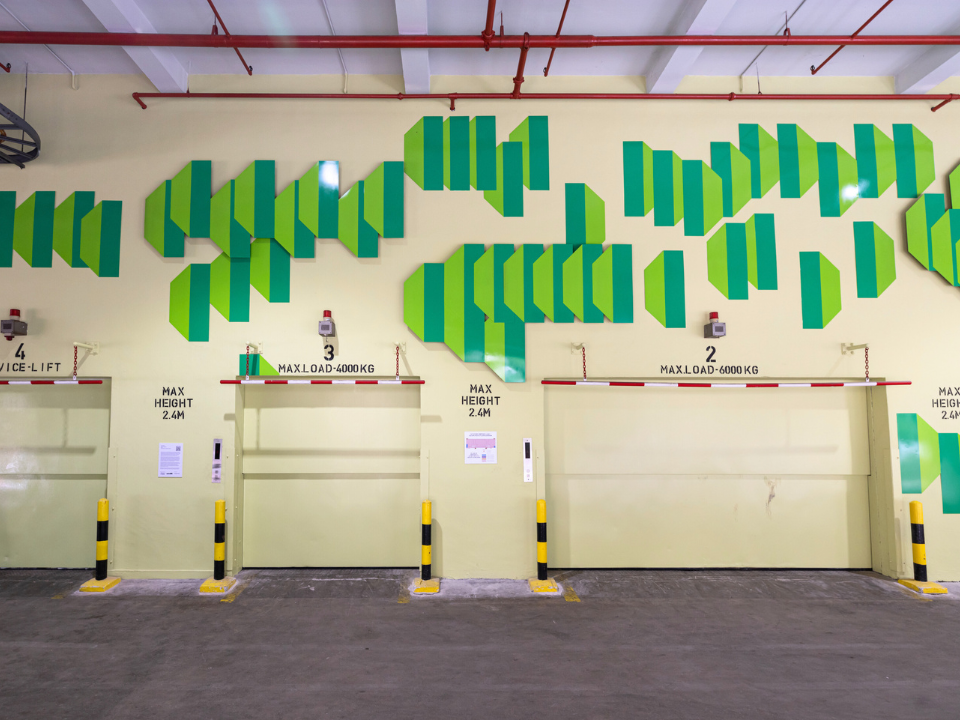
Tanjong Pagar Distripark Block 39, Cargo Lift, Lobby A, next to SAM
Public outdoor work. Accessible at all times.
Greener Pastures turns the industrial space into one of contemplation. It draws on cuboid forms, such as the containers, pallets, and boxes that define its surroundings. Positioned above the cargo lifts at Tanjong Pagar Distripark, the installation renders utilitarian shapes into a flowing pattern that explores themes of movement, function and identity. By emphasising the rhythms of the site, it captures the alignment, repetition, and spatial relationships between everyday objects, while inviting viewers to see the beauty in geometric precision and underlying order.
Sections painted in varying shades of green connect the structured cuboid forms, creating a vivid contrast against the industrial landscape. These green elements evoke a longing for balance, symbolising the “greener pastures” often hidden within urban spaces dominated by steel and concrete. The deliberate interplay between rigid man-made structures and the organic rhythm of nature suggests a quiet hope for harmony and renewal. It reflects an ongoing tension between progress and preservation, prompting viewers to consider what has been lost and reimagined in the constant transformation of modern urban environments.
The title of the work references the idiom, “greener pastures,” which means a better or more promising situation. The relocation of Singapore Art Museum from its former sites at Bras Basah Road and Queen Street, as well as the upcoming move of the Port of Singapore Authority (PSA) from Tanjong Pagar, Keppel, and Brani Terminals to Tuas Port, were decisions that were likely made with the aim of achieving better outcomes. As the urban landscape continues to evolve, the title suggests that every decision along the way is made with the intention of moving towards greener pastures. With the Greater Southern Waterfront masterplan unfolding, the future of Tanjong Pagar Distripark remains in flux. Within this context, Greener Pastures speaks to both positive growth and the unpredictability that persists, even with a plan in place.
Fiona’s work is grounded in precision, repetition and meticulous processes. Her labour-intensive pieces serve as meditative explorations of time, value and the act of making itself. This creative ritual becomes a way to explore order and rhythm while also questioning the spaces we occupy and the systems we build. In this composition, the repetition of cuboid forms reflects the cycles of labour and transport that define the site, while the trailing elements introduce moments of reflection and regeneration, quietly weaving through the structured forms and gently unfolding across the space.
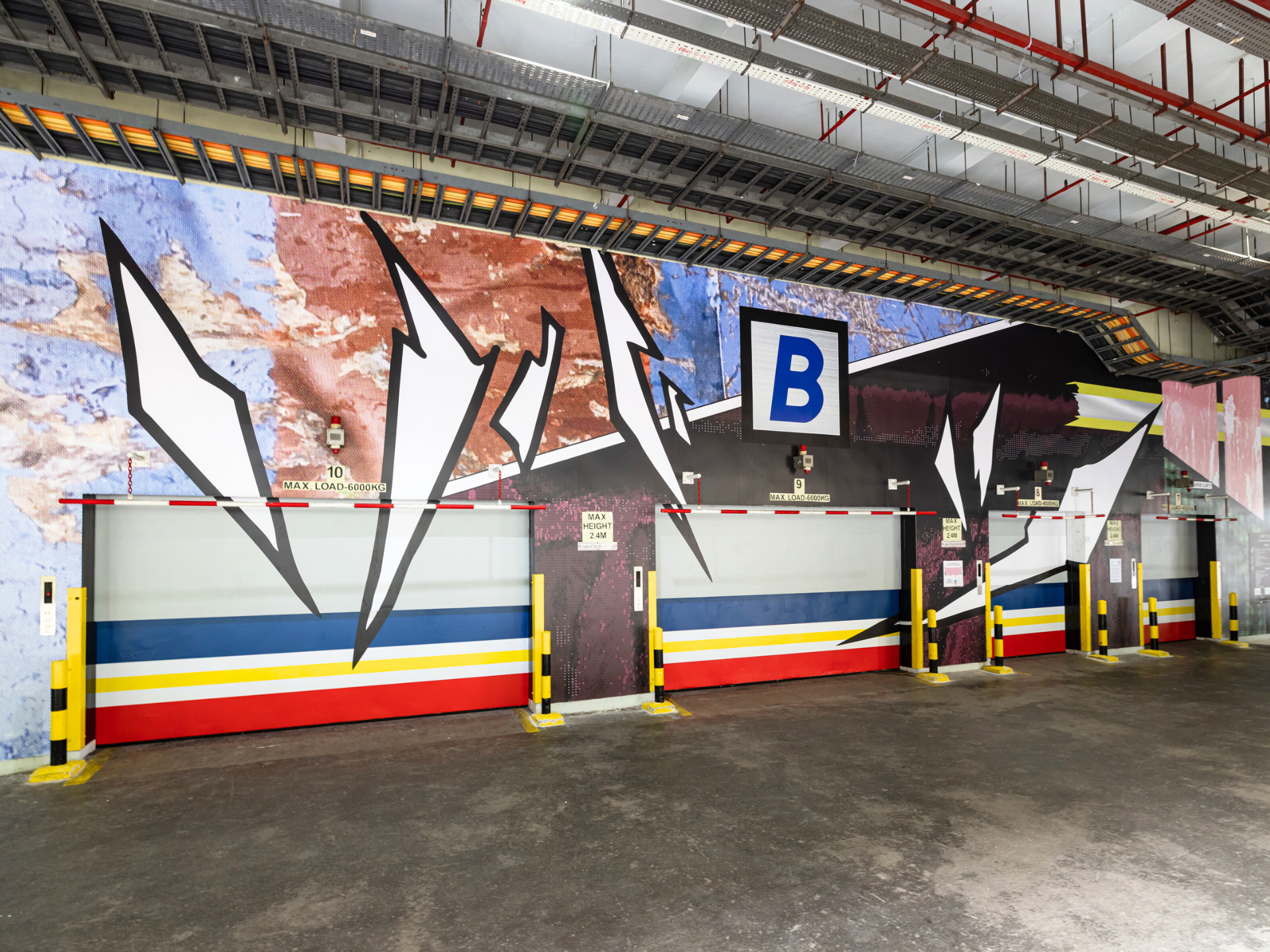
Ian Tee in collaboration with Muhammad Dhiya Bin Rahman (MDRN) and Jovan Tong DEEP CUTS
17 Jan 2025 to 31 Dec 2026
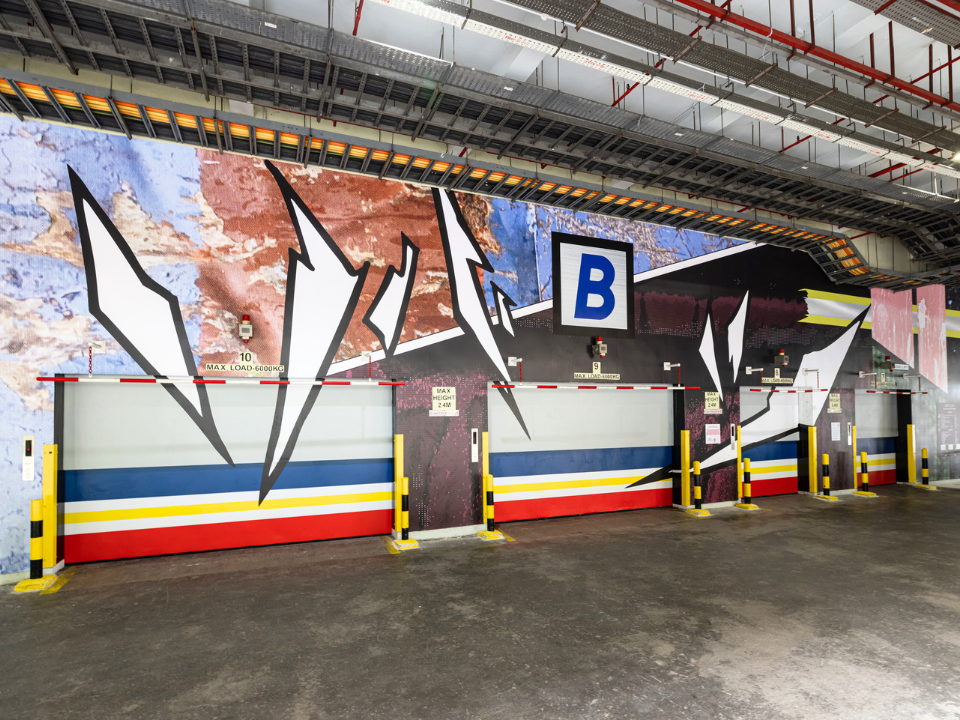
Tanjong Pagar Distripark Block 39, Cargo Lift, Lobby B, next to SAM
Public outdoor work. Accessible at all times.
DEEP CUTS transforms the materials and surfaces of the artist’s studio into a striking visual narrative. Drawing from the surroundings that shape the artist’s practice, as well as the industrial character of the mural’s site, it reassembles fragments of raw, utilitarian materials and textures into a cohesive composition. Structured like a graphic novel, the work features panels connected by action lines and a rhythm that guides the viewer’s gaze.
The title, DEEP CUTS, refers to niche or lesser-known media that have dedicated followers, reflecting the artist’s appreciation of the visual motifs that inspire his painting practice. This mural explores the aesthetics of both print and digital media, adapting the process of mediums like woodblock printing, Ben-Day dots, CMYK halftones, pixel art and ASCII graphics. By amplifying and distilling the marks of these intricate details, the work blurs the line between recognition and abstraction, inviting viewers to reconsider how variations in scale across physical and virtual spaces can affect our interpretation of an image.
As part of the process of creating the mural, photographs of distressed metal containers, paint splattered walls, as well as high-resolution scans of textiles were digitally manipulated to accentuate different formal qualities. For example, paint drips were given a halftone treatment, dissolving the image into clusters of smaller dots. Similarly, the warp and weft of textiles were abstracted into simple lines of varying widths. These techniques are commonly used in silkscreen printing and graphic design to create the illusion of depth or gradients.
Taken together, this exploration of perception aligns with the artist’s broader practice, which investigates how images and artistic mediums are interpreted. Working with materials such as aluminium, textiles, and employing collage as a technique, Ian’s practice focuses on formal concerns like texture, colour, and line quality, while engaging with their cultural associations. Themes of youth, defiance and self-expression emerge in his work, drawing inspiration from the vibrant energy and visual style of various subcultures. These references add both vitality and introspection, balancing subjectivity with a collective resonance.
DEEP CUTS reimagines the mundane as extraordinary, encouraging a deeper engagement with the visual world. The fragmented imagery invites viewers to pause, reflect and find meaning in the subtle abstractions that permeate their everyday experiences. Through a blend of observation, memory and imagination, the work reshapes how we perceive and connect with the spaces we inhabit.

 Buy Tickets